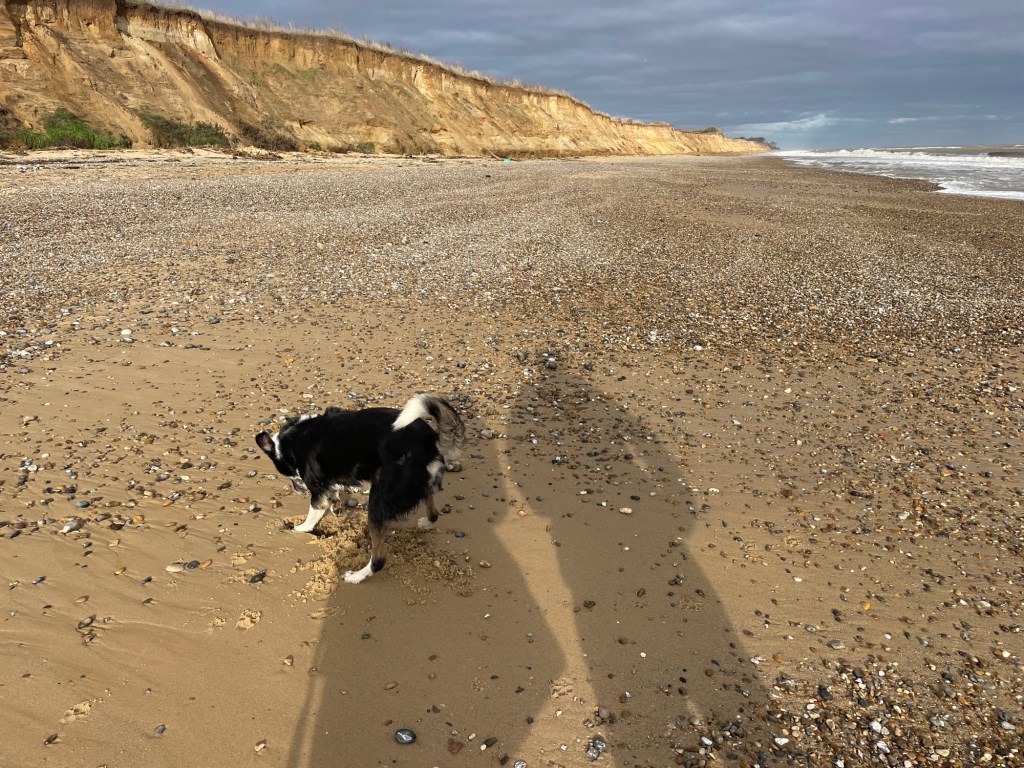
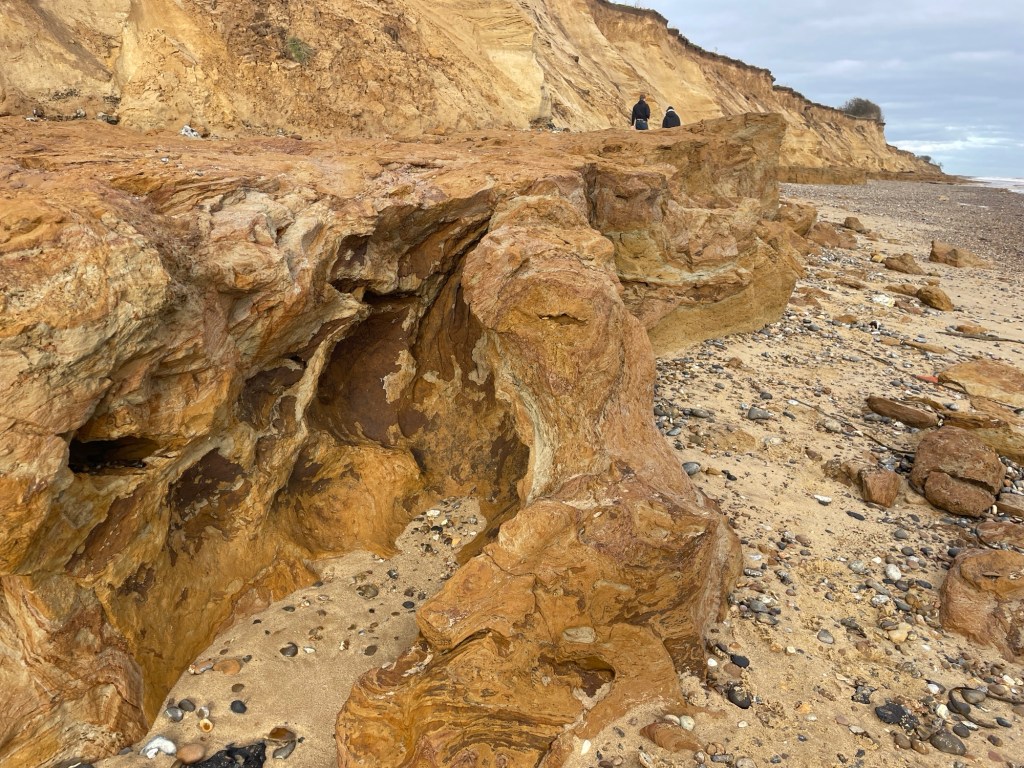
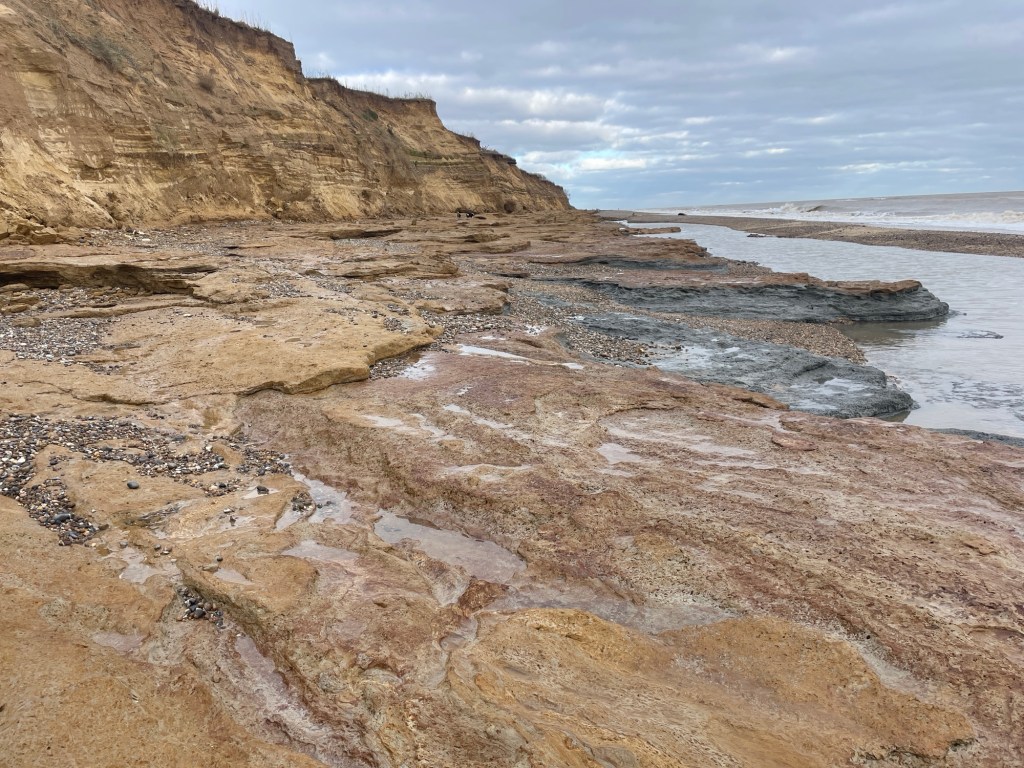
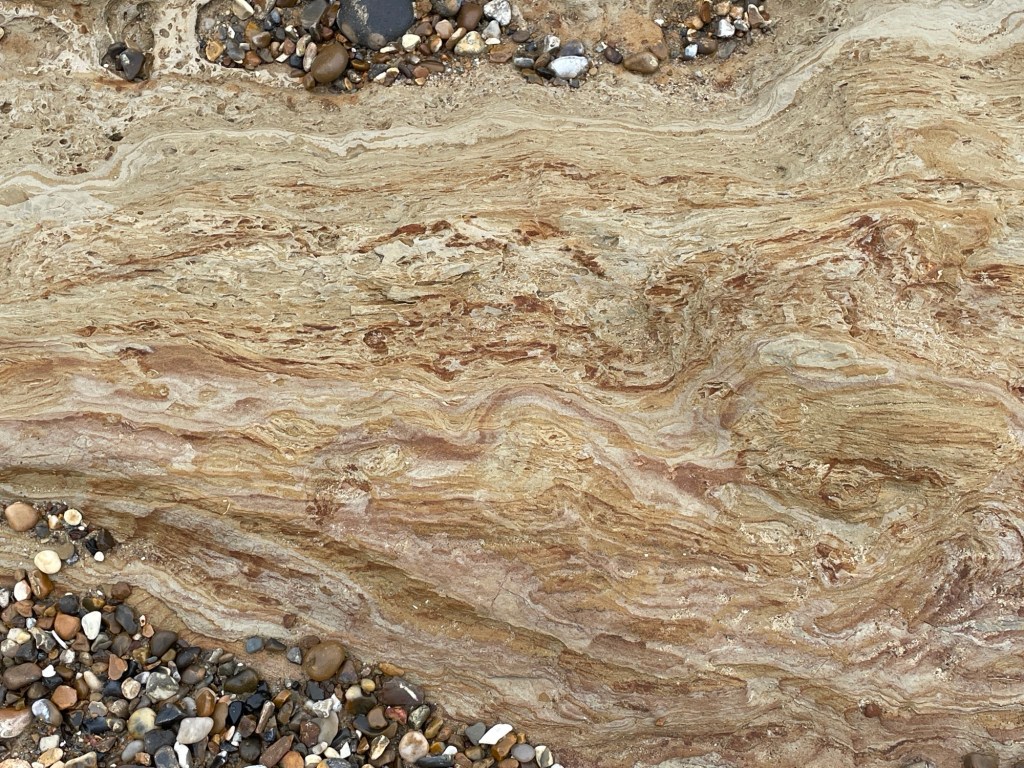
So many questions. Layers of time and geology. The recent high tides have dramatically changed the land/sea meeting, not only exposing more of the sandly/shingle cliff but depositing some slippery clay sand mix which it being high tide we were oblidged to walk on. We began our questions early on, as we trod nervously on the slippy surface, so slowed our pace, which gave time to look and wonder. Unexpectedly this fitted well with the recent visit of Howard Mottram to Greg and Kinda I need Howard here, I said to Brian, who was on this adventure with me.
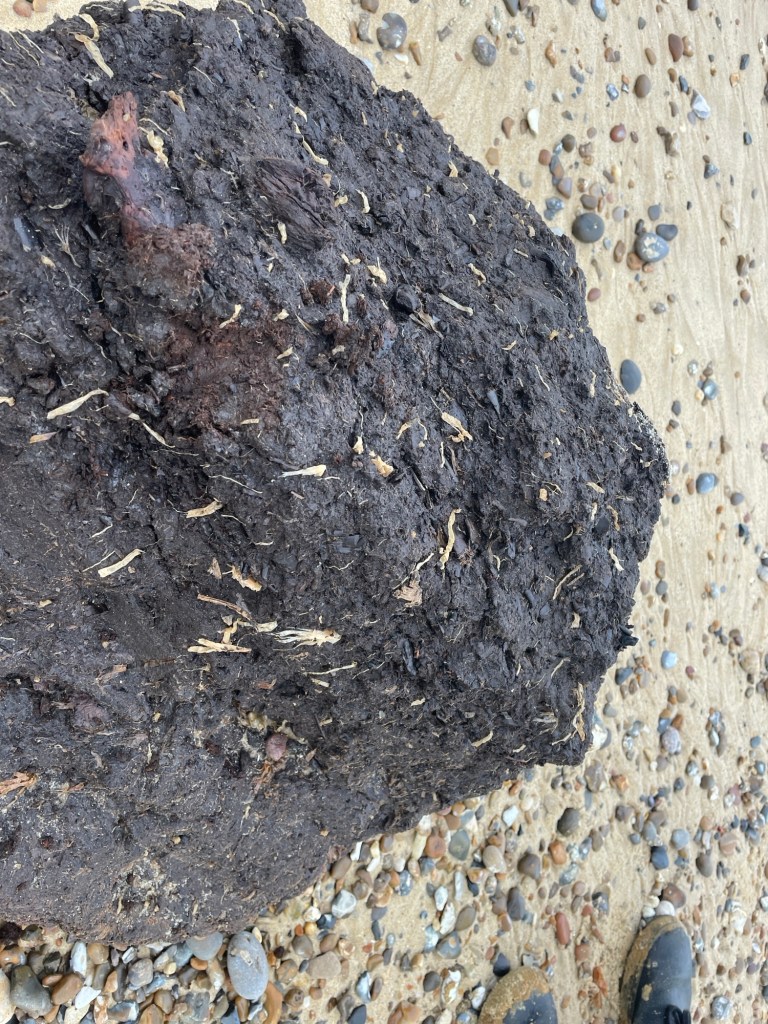
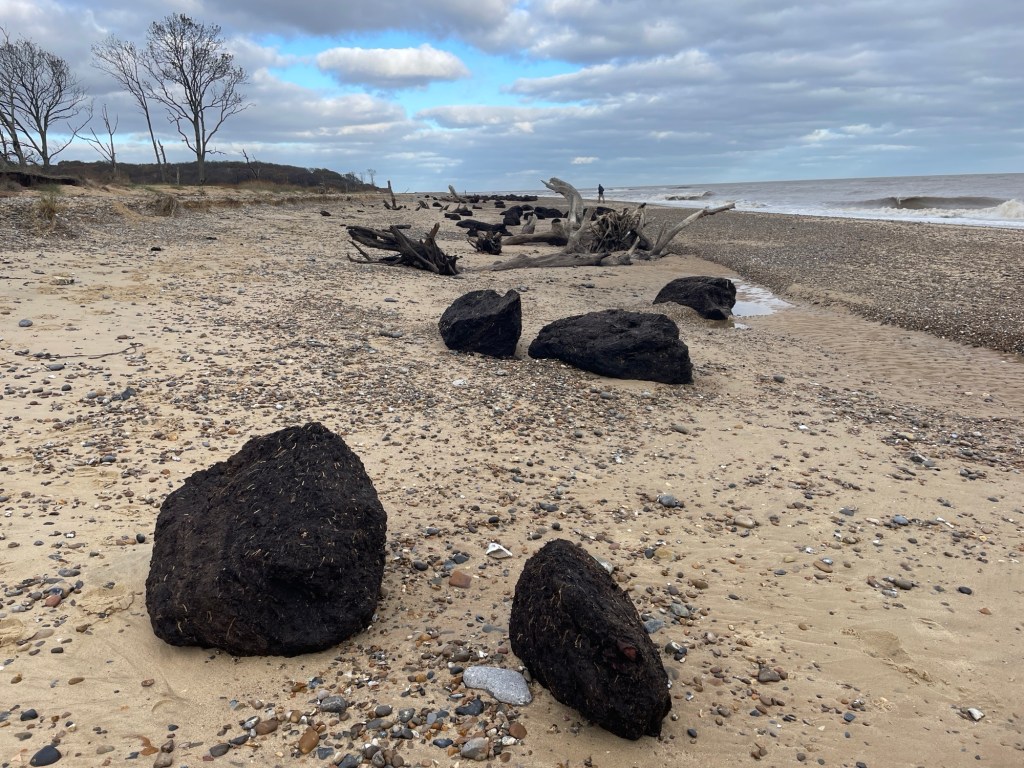
Layers of bolder clay with sand. Pebble layers. Moss layer. Huge flints. And then …. Elephant turds of rich compost soil only on Benacre broad beach. Who can help interpret I asked my community on FB. Jamie Mac pointed me to this site:
What makes Covehithe interesting is a series of thick shell beds below beach level, where shells are exposed in life position, along with a black carbon layer containing fossil seeds. This is the only place where these can be found in the Pliocene Crags. Glacial flint fossils can also be collected.
The glacial beds at Benacre are a fantastic example of sedimentation during the Ice Age. Below the glacial silts, the sands, clays and pebble beds are the continuation of the Baventian Clay, … which dates from 1.5-1.6 million years ago and were formed during a cold period. The glacial sands/gravels and tills are laid on top. The cliffs at Benacre also reveal easily-eroded sands and clays of the Norwich Crag Formation, deposited in shallow marine conditions about 1.8 million years ago.
Flint: The bizarre shapes of flint nodules, with spiky protrusions and holes, are thought to be due to flint replacing the chalk in the burrows of marine animals such as arthropods that were living beneath the Chalk Sea floor, and it was this connection with burrows that proved to be the key to how flint was formed. The process of flint formation was originally the subject of much argument and was only finally worked out in the 1980s when it was established that flint formed preferentially in burrows due to the presence of decaying organic matter, and also at the ‘redox boundary’, below which anaerobic, sulphate-reducing bacteria predominate. The shape of a flint nodule is therefore often the shape of an animal’s
burrow, with the surface often showing the burrowed fabric of the chalk it has replaced. The resemblance to bones, teeth or fossilised animals is purely coincidental. The positions of horizontal beds of flint nodules were also determined by climate cycles.





 Kalikellett