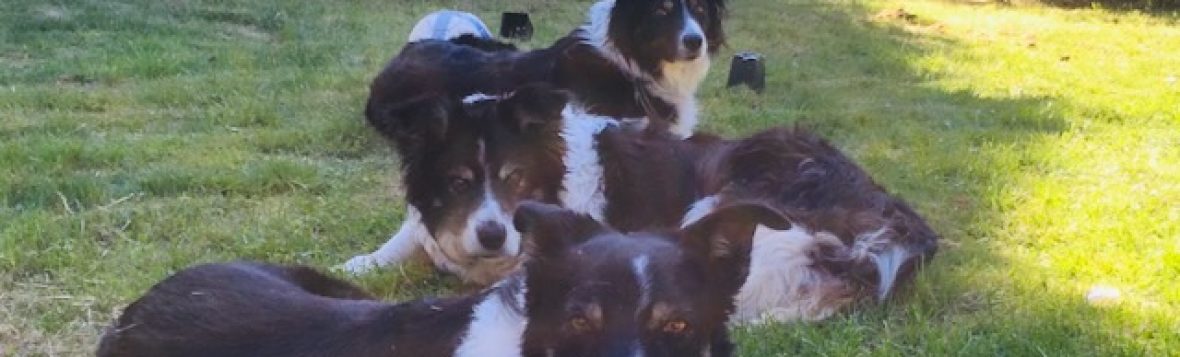
Email to Robert December 2024: I am sitting in a farrow and balled sufolk pub, eating pigeon breast after a 8k walk in gentle mist. The breast is tasty but the knife is not sharp enough. Somehow I think of you. After many years it is the first time u do not call on my birthday. Is it time for me to visit you?
January 2025, I received a message via Kinda to contact someone called Richard about Robert Booth.
Here’s the rounding story.
Richard, who now lived in the home once lived in by Robert Booth, had opened my Christmas letter to Robert. He lived in this space as Robert had died nearly a year before, in January 2024. (So the last time I spoke with Robert was here, December 2023 – I wonder did i have some kind of intuition this was the last time, that I bothered to write about it?) This letter and the opening of it was unexpected, and something about the words intrigued Richard. He found me, via Kinda and here we are, 3 months later, in my kitchen at East Lodge, both of us drinking tea after a day in Staverton Thicks.
I did not have a particularly close and certainly not regular relation with Robert, we had not seen each other in over 20 years. Our contact was by telephone every year when Robert would – religiously – call around my birthday. Did he have a birthday book of friends? Did he call others – other women perhaps? Despite this lack of contact, I was shocked to hear he had died. Another death of a past, another person not visited. A fading away of a shadow? A touch of a person I was then, my hopes and dreams, compared to now? It is difficult to say exactly why the ignorance rankles – Richard and I had this conversation with no resolution but finding the same disquiet.
January 1987 I moved into Robert’s spare room in 14 Earls Court Square. A bachelor flat, large elegant sitting room with a small room of it with reel to reel tapes and recording equipment. A long passage, lined with book cases, off which was a tall small kitchen, with red walls, pine wood shelves packed with interesting food and seasoning, bar stools to sit on. Here we drank our wine, chewed the cud on the days, while invariably Robert cooked. Was he working then for Radio 4 as a continuity announcer? Or was he involved in ‘Could do Better? based on famous peoples school reports’ I have no clear memory of where Robert was on his life work path. But important to add here, that from this first floor flat and through Robert I met Chris Long, who lived in the basement of 14, and writes this, much more precise account of Robert.
I think it’s possible that he never felt he was brilliant at any one thing, being surrounded by people who were. Barry Humphreys used to eat with us on his London tours and sparkled as he cleverly elicited ideas from us that he could weave into his shows – as we discovered when we went to his dress rehearsals with Diane. Robert knew that he was a feed, that his book collection would never match Barry’s and that he was never going to be the great actor/showman he would have loved to be. Quentin Crisp was another and there I know that Robert was in his element at suppers (again in his flat or mine) where Quentin consistently addressed us as Mr Booth and Mr Long and Robert came alive in the presence of someone who was a one-man show without any need for a stage. Quentin told me he thought Robert would be “a phenomenon” though this was a time when, with a CIoJ card in his pocket, he launched into radio packages for a variety of programmes on Radio 4 – including an item on Spoons in which he interviewed me for Money Box! Diana Athill (genius within André Deutsch) had a huge regard for him and his potential and asked me how she could help him… If he had had a great book within him she would have published it like a shot. So altogether I think he felt he hadn’t really succeeded at anything ‘brilliantly’. He had the same capacity I had for writing light, amusing, flippant articles that were utterly ephemeral and forgettable – much in the same way as his Classic FM presentations and my feature articles and Diary items for the Evening Standard, London Portrait Magazine, etc. I think we saw much less of each other when I went into the founding and editing of World Magazine and Music Magazine when suddenly we were almost competitors! I think Robert saw himself as someone who ought to have been an ex-Cambridge, latter-day ‘Glittering Prizes’ candidate and funnily enough I introduced him to Freddy Raphael in my kitchen (the red one you describe, but Robert’s had the bar stools!) and they disliked each other as quickly as I had disliked Raphael myself.
Perhaps he was forever feeling that he hadn’t ‘made it’ while I (with none of the Cambridge and brilliant entourage and promises to be fulfilled) was really quite OK with a humdrum career that seldom hit many high spots. I hope he understood that he entertained and enriched the lives of a great many people but perhaps he was disappointed that, unlike you and me, his name will not live on like Barry, Quentin, Diana and so many others of that rather amazing 1960s-1980s period. We are tolerably happy with what we have achieved, n’est-ce pas, but I fear he wasn’t…
As I said to Robert in an email on October 2017: “October 1987, I was living with you in Earls Court Square. I remember waking up and seeing the TV antennae moving more dramatically than it should do on our roof top. Walking out, then I saw the devastation of the storm. Little did I know then that I would end up surrounded with trees, and working among them, knowing and loving them. I’ve just been to a conference on the Great Storm of 87 – 30 years on what we’ve learned and future predictions. Naturally I think back to that time.
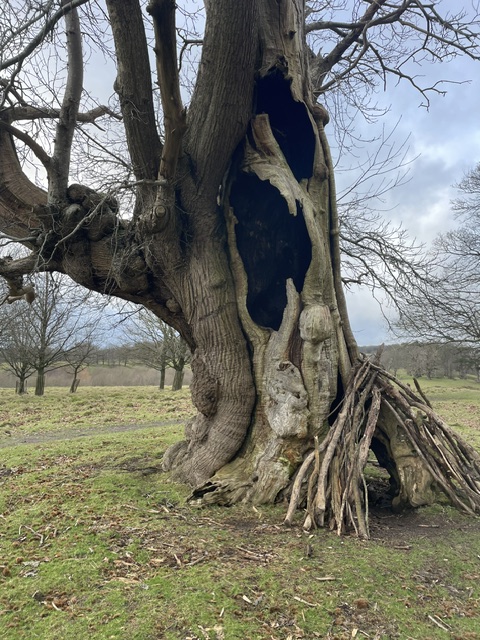
Through my letter to Robert, Richard had gathered my interest in trees and woodland. We had this connection. He sent me photographs of some of the magnificent trees around Petworth. (The place I never visited to see Robert). He told me he was grieving, for his wife Laura, who had recently died (March 2024).

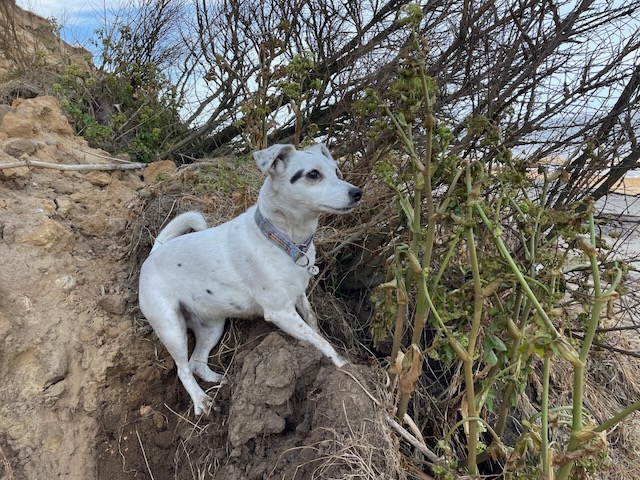
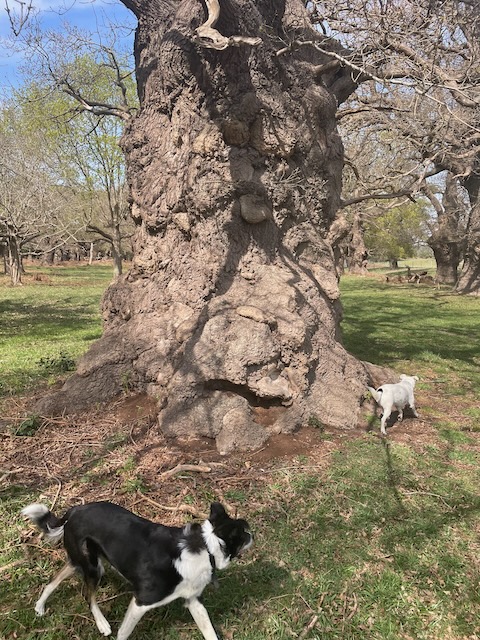
My first sight of Mimi in this photograph. Yes, we both also shared a love of dogs.
Richard with admiral self sufficiency, arrived in his Fiat Ducarto campervan down the track beside the field, from where he emerged, greeted me, then made us a cup of tea. Sam, Ryan and I closed up for the day our work on the Community Garden. To pass the time as we packed away, Richard counted my alive and dead trees to gauge a success rate in this drought, and the numbers were not bad, only 1 in 40 gone so far, and some of those may not have been planted.
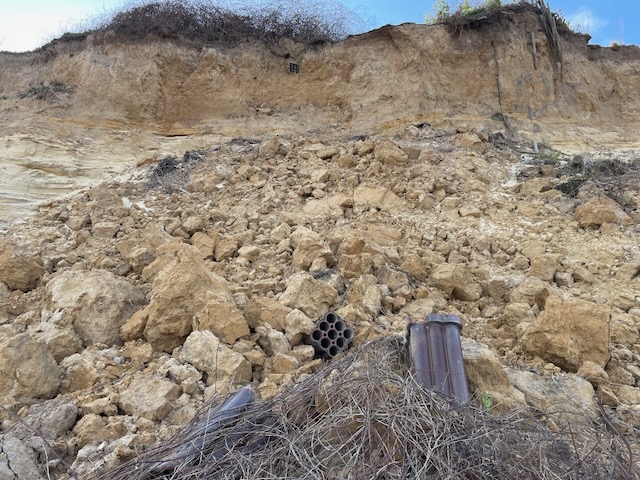
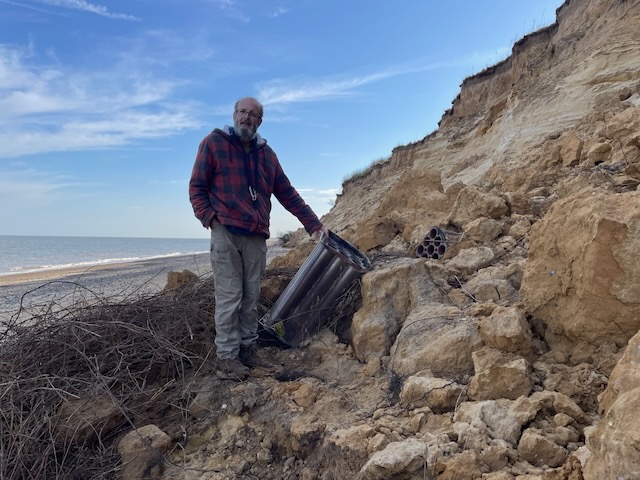
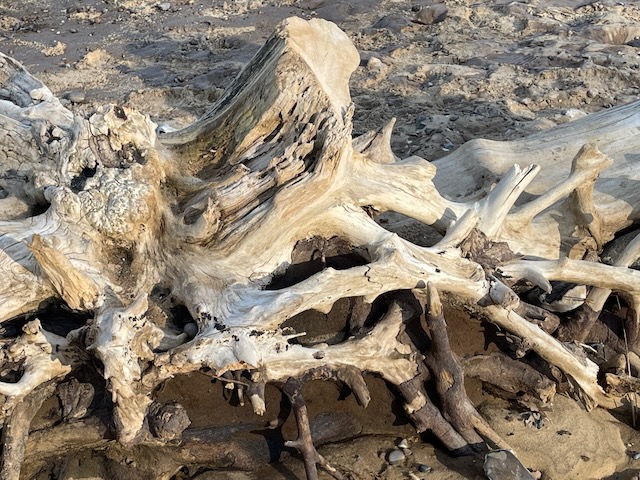
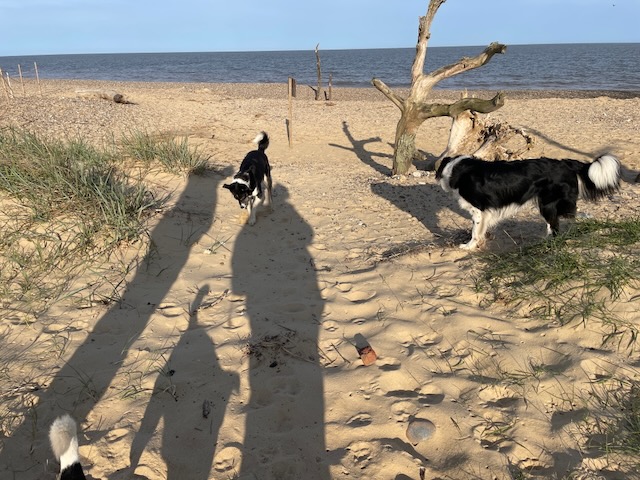
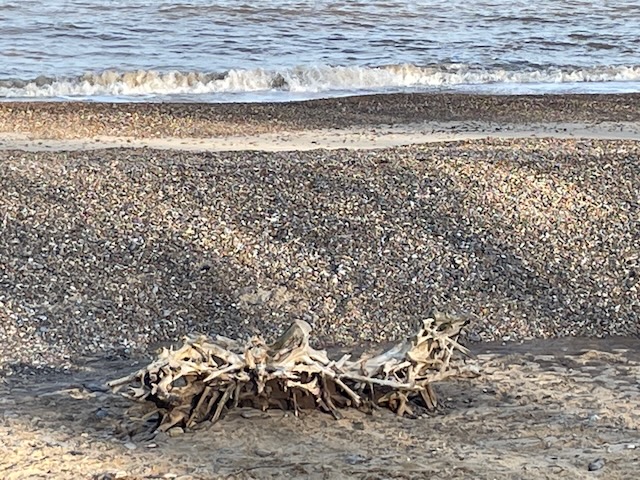
In the warm light of the following early evening, the day work done, we drove to South Cove, for Richard to feel the east coast eroding 1-2 meters a year, and see the skeletons of the wind and see washed trees which had fallen into the beach.
It’s good to get out. After days of head down on the land, I was glad for the opportunity to look out. Every hedgerow was edged with Alexanders. Richard looked it up: Smyrnium olusatrum, common name Alexanders is an edible flowering plant of the family Apiaceae (Umbelliferae), which grows around the Mediterranean and Atlantic coastal regions of Europe. It was formerly widely grown as a pot herb, but is now appreciated mostly by foragers.” The Alexander was part of the first evidence of cliff erosion – an Alexander at the foot of a elm clump recently fallen, allowed Richard to easily pull out the root and break it – a sweet, swede scent.
At Cove Hithe church, glorious in the evening sun, the grey of flint edged offset against the lime green Alexanders. How the lichen grows on the north side, I noticed this time, as Richard marveled at the knapping of the square of flints. Inside a definite woodwose on the font.


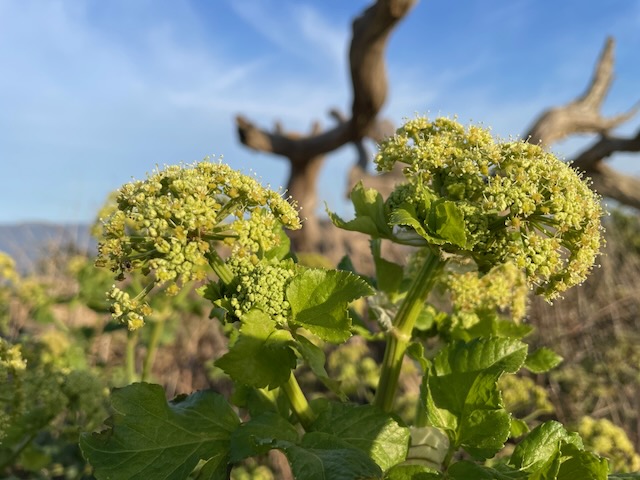
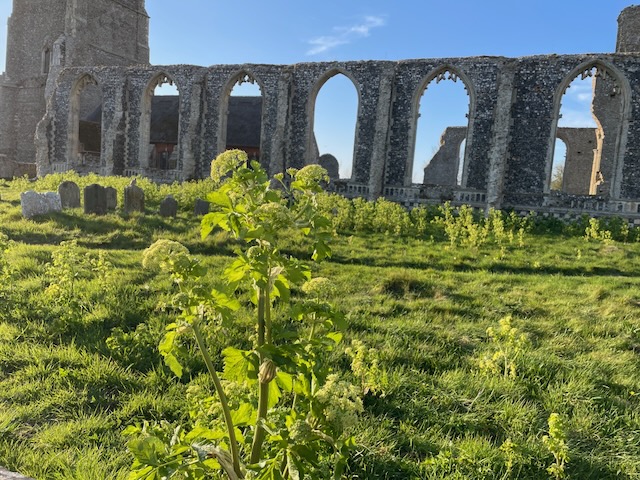
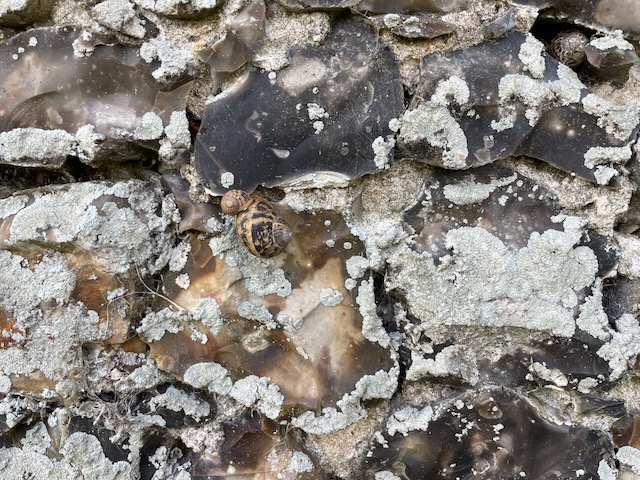

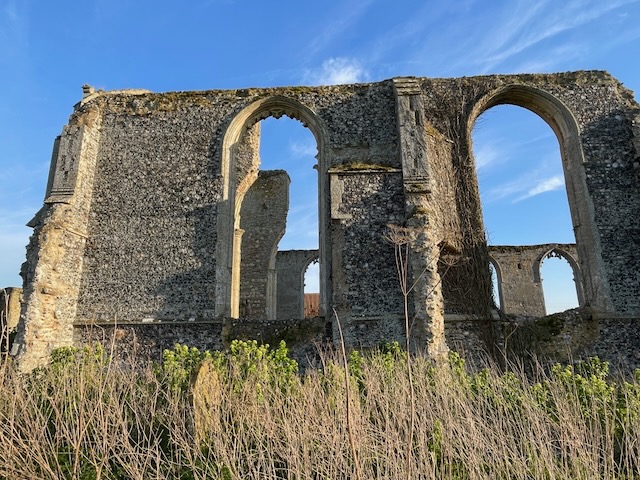

We finished the evening at the harbour inn, eating fish and chips/fish pie, in time to see the clear sun set over the Baily bridge. Yes, it’s good to get out!
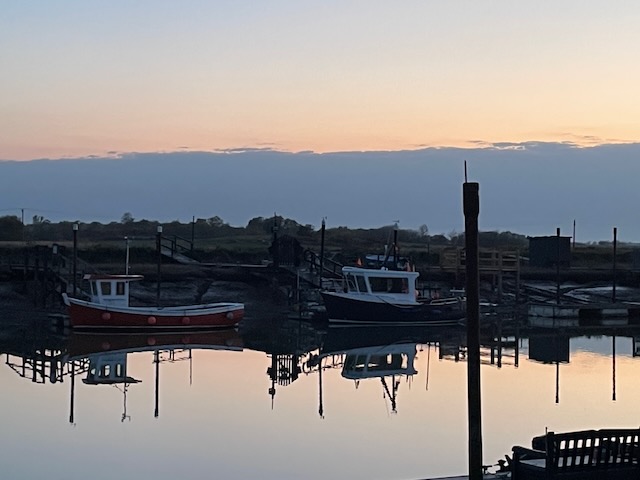
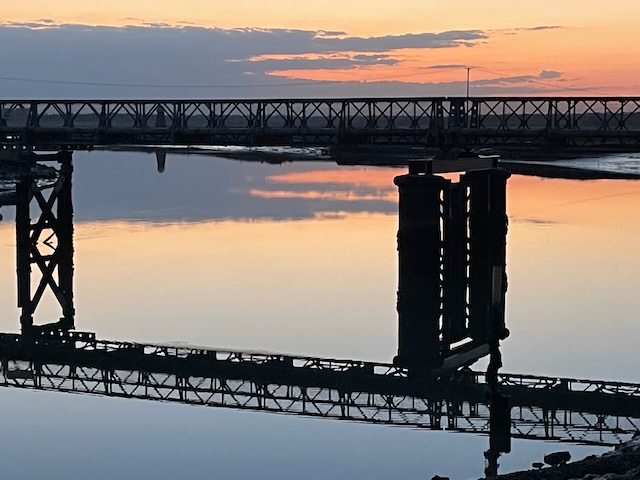
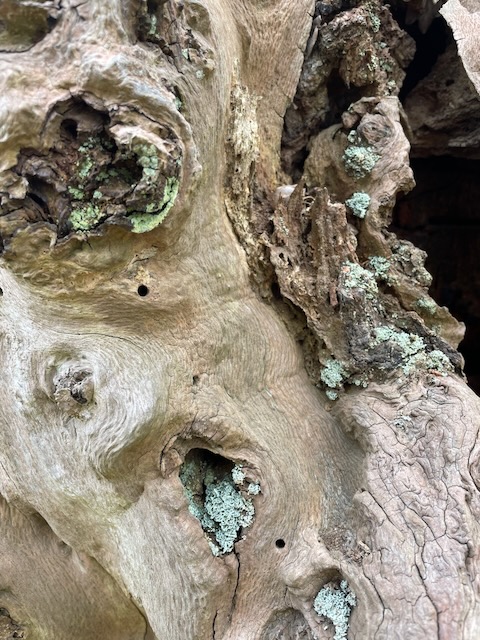
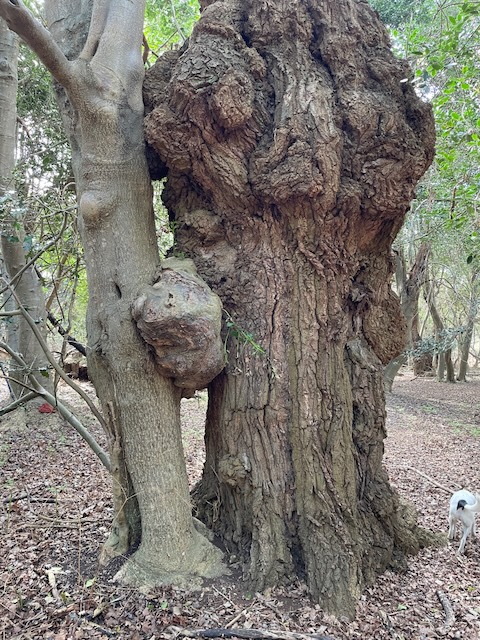
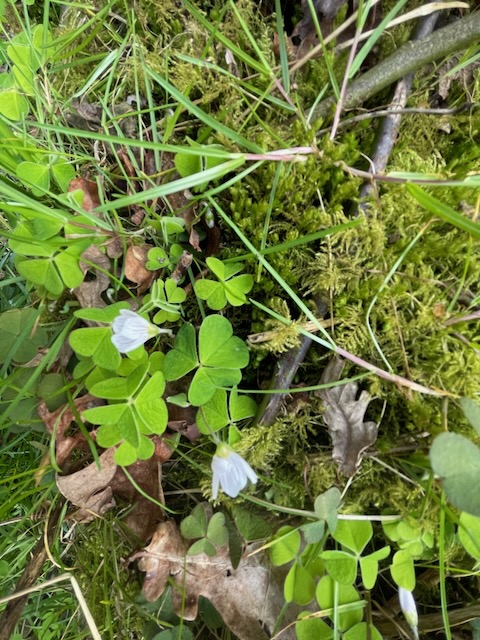
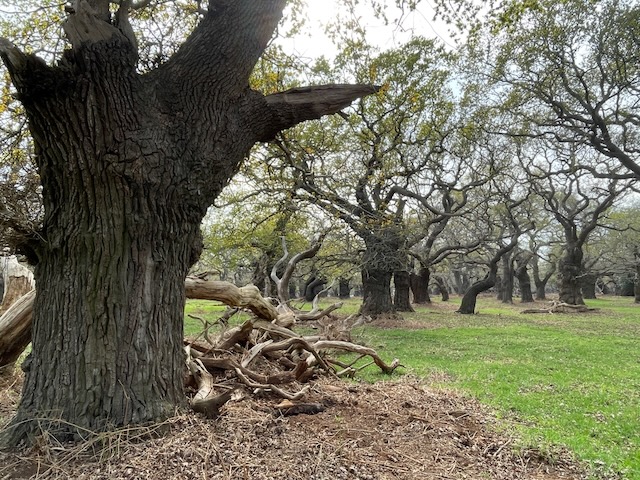
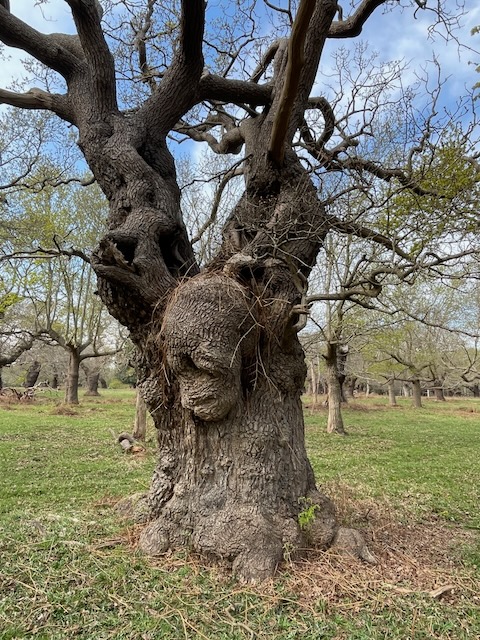
Staverton Thicks was the place I wanted to take Richard to. Wood Pasture. Planted in the C15th. Those great pollarded oaks were just coming into blossom, many we noticed at variable times and I realised that I had never visited this time of year before. The wood sorrel and creeping jenny on the ground. My old friends were there, one I called Albert, particularly popular with epicormic growths: As Richard reminded me, it is caused by proliferation of growth from buds under the bark. Commonly these take the form of roughly hemi-spherical swellings. The grain is much wilder, swirling in different directions, with the numerous buds showing up as circles, giving rise to the expressions ‘pippy oak’ or ‘cat’s paw’. This attractively-figured grain makes pippy oak valuable for veneers and in wood-carving and there are stories of promising-looking burrs being ‘poached’.
Richard took some fine photographs of some of the detail, here they are
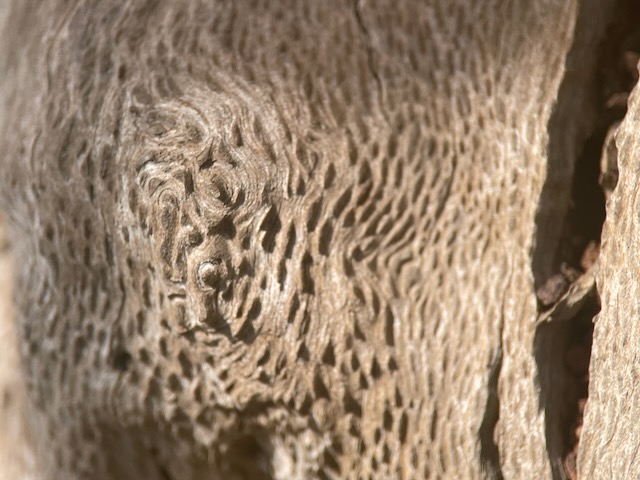
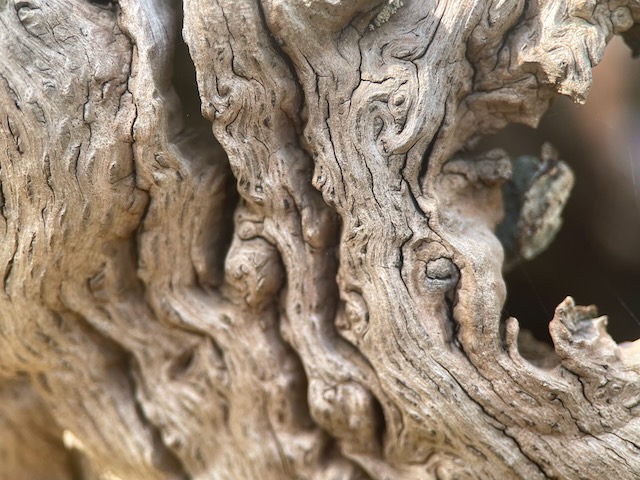


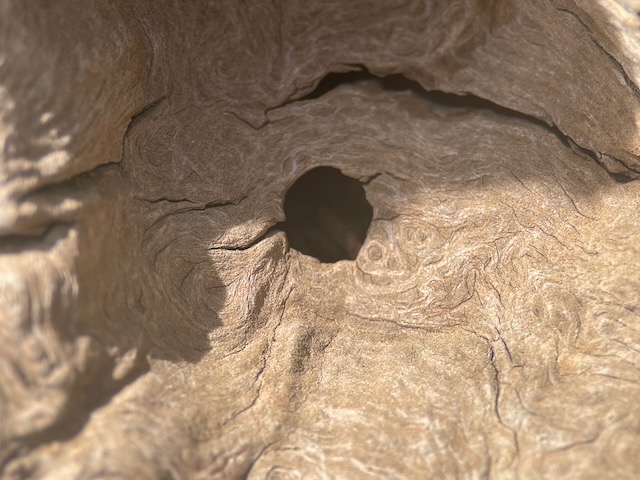
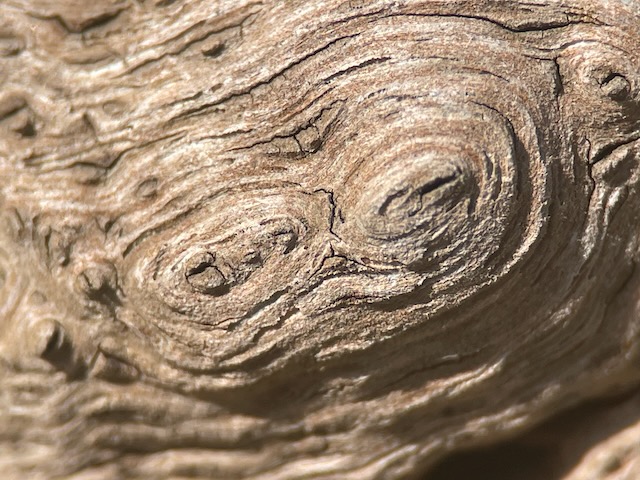
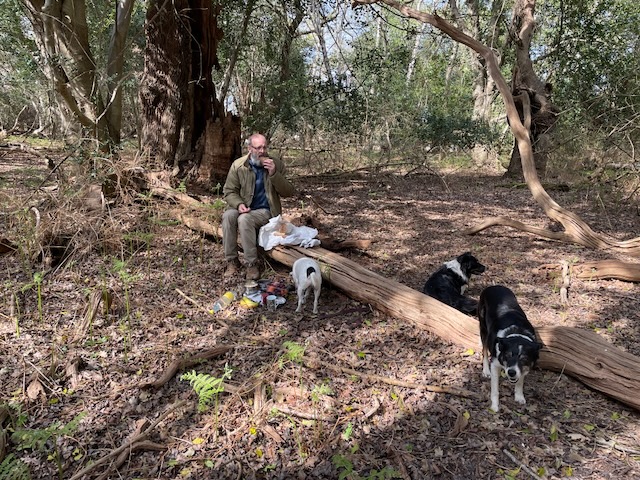
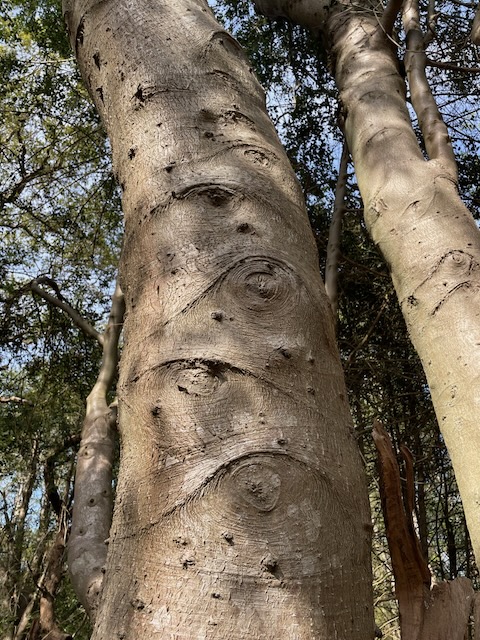
I want to return with a sketch book. We had a picnic among the Thicks, more protected from the north east wind, and sitting under a collection of them, I noticed their eyes in the holly stem. There must be some useful symbiosis between the holly and the oak, so close they lived together, one fusing into the other I noticed.


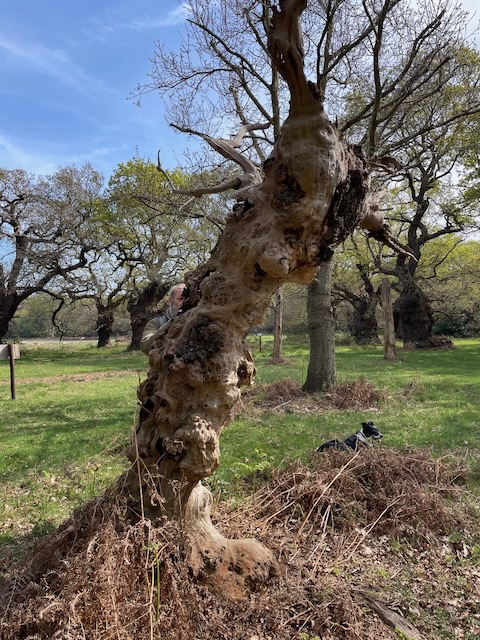

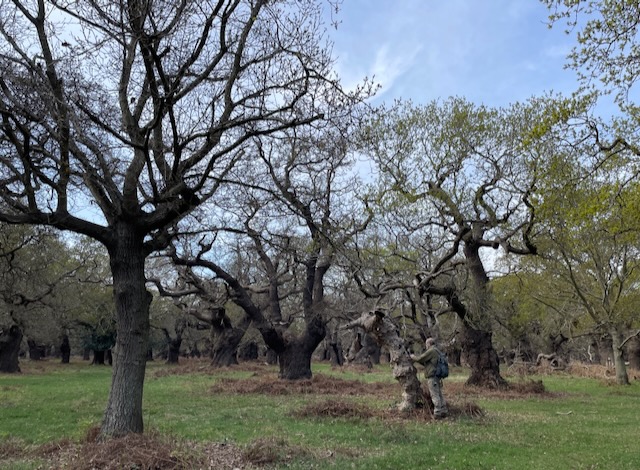

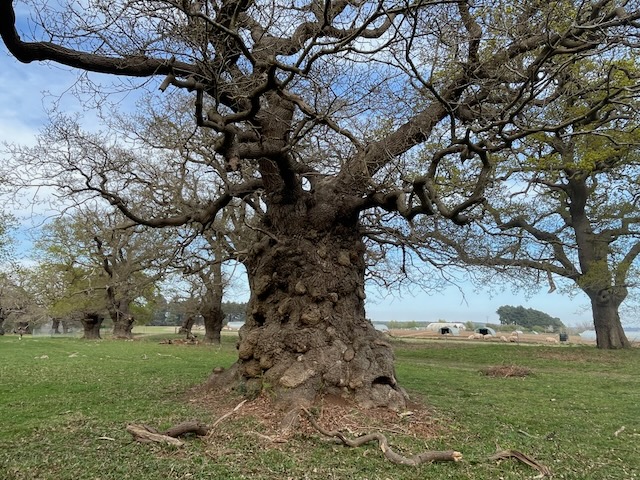
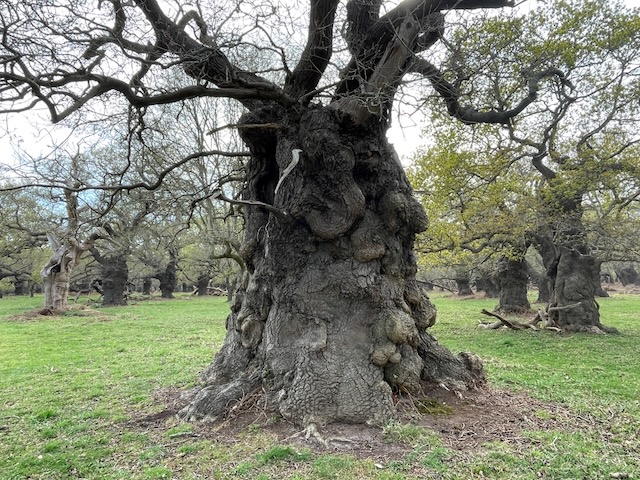
A swift cuppa in Orford, and back home to Pinny’s smoked mackeral, and writing up this record.
It has been such a pleasure to be with another who loves and knows about trees, who reminds me to tie an undone shoe lace, who cleans the window of my van and encourages me to have a go at the rest of it, who checks my water and oil in the engine which I only just remembered how to open, who understands the need to pay Sophie my clearer who I forgot to pay, who reminds me of the sacred, and tempts me to Glastonbury and who has the most adorable bright terrier dog, Mimi. She found evidence of rates in so many places.
Today I keep warm wearing the burnt ochre scarf he gave me, and I used the Opinal knife to open the physellia seed packed. Rain is due!


 Kalikellett
what a lovely, interesting piece of writing, Rachel. I enjoyed reading it and loved the photos. Miss you. Xxxx